
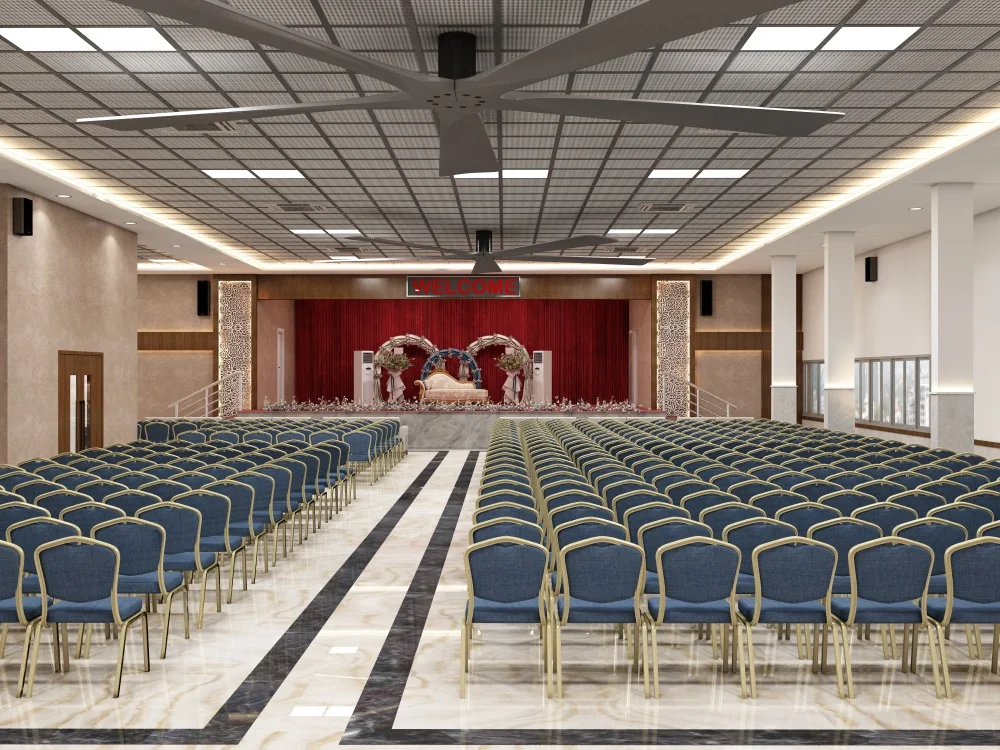
When families compare venues, photographs often dominate the first conversation. They matter, but they do not tell you how the hall performs when it is full, how vendors work behind the scenes or what happens when relatives need a room between events. A better comparison uses the same practical questions for every property.
1. Is the location right for your guests?
Think about where most guests are coming from rather than choosing a venue simply because it is closer to one family home. For a Kinnigoli, Kateel, Mulki or northern Mangaluru guest base, a local venue can reduce city travel. If most attendees live in central Mangaluru, the city may be more convenient.
2. Is the hall comfortable at full occupancy?
Ask about air-conditioning, ceiling height and airflow. A hall can feel excellent when empty and very different after guests, lighting, catering service and stage equipment are all operating. If possible, ask how the system is designed for event conditions rather than relying only on a short site visit.
3. Does the stage work for your programme?
Check stage width, depth, sightlines and access. A wedding reception, cultural programme and corporate event all use a stage differently. Make sure decoration plans do not consume so much depth that the usable stage becomes cramped.
4. Are there proper green rooms?
Dedicated green rooms reduce stress for the couple, family and performers. Attached washrooms, air-conditioning and secure access are valuable, especially for long programmes or events with multiple outfit changes.
5. What audio is included?
Confirm microphones, speakers, mixer access and what outside vendors are allowed to bring. Good speech intelligibility is more important than raw volume. If you plan live music or a DJ, discuss power and connection requirements before the event.
6. Are guest rooms available on site?
For weddings and family functions, accommodation can be the deciding factor. A hall with rooms in the same property simplifies arrivals, dressing, elderly guests and the morning after the event. Ask how many rooms can realistically be held for your date and what categories are available.
7. What exactly does the booking slot include?
Do not assume that an “evening event” automatically gives decorators access from the morning. Ask when vendors can enter, when the hall must be vacated and whether setup or dismantling time is included.
8. How transparent is the booking process?
You should know whether a date is merely available, temporarily held or formally confirmed, what advance is required and what happens if plans change. Written terms protect both the family and the venue.
The public ANVAYA Banquet Availability calendar is intended to make date and slot discovery easier. Guests can request an available slot online, after which the ANVAYA team confirms the event details separately. It is intentionally not an instant-booking system.
Use a comparison sheet
When visiting two or three venues, write the answers down under the same headings: location, hall, AC, stage, green rooms, sound, rooms, setup access, catering rules, parking, commercial terms and cancellation conditions. The differences become much clearer when you compare like with like.